
Why Industries in Punjab Need Regular Ambient Air Quality Monitoring
If you run a factory, a power plant, or any industrial facility in Punjab, there is a good chance someone from the SPCB (State Pollution Control Board) has either visited you or sent you a notice in the past two years. Air quality compliance is no longer a box-ticking exercise.
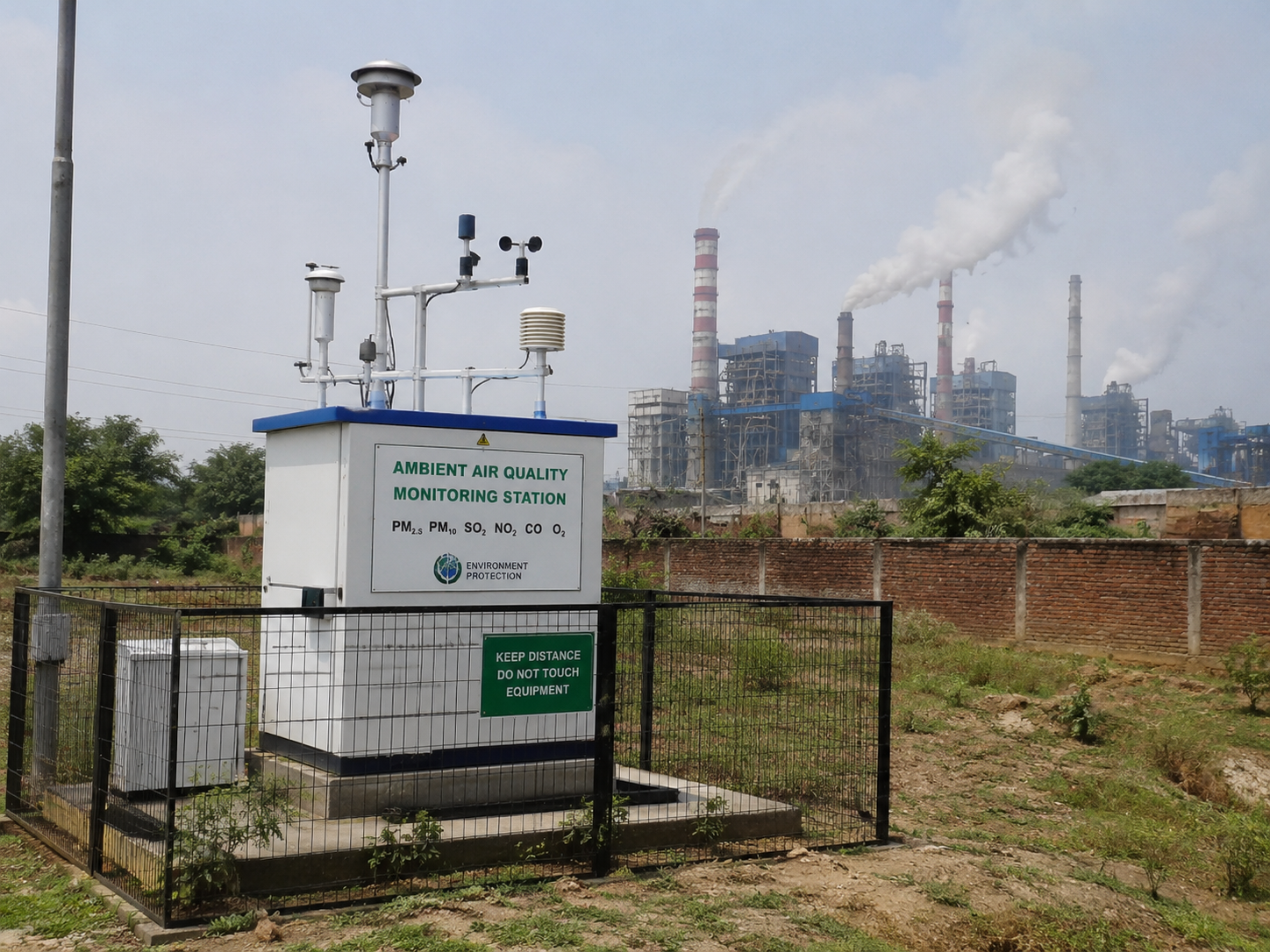
Ambient air quality monitoring services is the process of measuring pollutants in the outdoor air around your facility — not inside your stack, but in the surrounding environment. Think of it as a health check for the air your neighbours and workers are breathing.
What Is Ambient Air Quality Monitoring?
Unlike stack or duct emissions monitoring — which measures what comes out of your chimney — ambient monitoring measures what ends up in the air at ground level. Standards are set by the Central Pollution Control Board (CPCB) under the National Ambient Air Quality Standards (NAAQS).
The main pollutants measured include PM2.5, PM10, SO2, NO2, CO, ozone, and lead. If your facility falls into a designated industrial category under the Environment Protection Act, monitoring these parameters is not optional.
Who Needs It in Punjab?
Any industry classified as a Red, Orange, or Yellow category unit by CPCB needs to carry out ambient air quality monitoring at regular intervals. This includes:
- Cement and construction material manufacturers
- Textile dyeing and processing units
- Chemical plants and pharmaceutical units
- Food processing factories with heavy fuel combustion
- Hospitals with incinerators
- Brick kilns and stone crushers operating near residential zones
Punjab has a higher concentration of these industries in clusters around Ludhiana, Mohali, Amritsar, and Jalandhar. Local SPCB offices have been tightening their inspection schedules, particularly after the post-harvest stubble burning seasons raised baseline PM levels sharply.
How Often Should Monitoring Be Done?
Frequency depends on your consent conditions from the SPCB. Standard requirements for most Red category industries call for 24-hour samples on a minimum of 8 days per month, spread across different weather conditions. Some units with larger emission footprints are asked to install Continuous Ambient Air Quality Monitoring Systems (CAAQMS) that run 24/7.
If you are unsure what your consent specifies, check your Consent to Operate document. The monitoring parameters and frequency will be listed there.
| Important
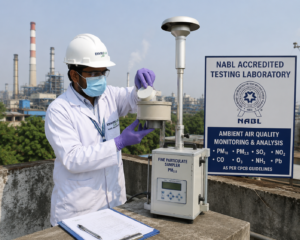
Using a NABL-accredited laboratory for ambient air quality testing is required for reports submitted to regulatory bodies. Reports from non-accredited labs may be rejected during SPCB review. |
The Consequences of Skipping It
Industries caught without recent ambient monitoring data during an inspection face show-cause notices, fines, and — in repeat cases — temporary closure orders. Beyond compliance, there are liability issues. If a neighbouring community files a pollution complaint and you have no monitoring data to show, your position weakens considerably.
There have been cases in Punjab where units lost their Consent to Operate renewal specifically because monitoring records were incomplete or conducted by labs without NABL accreditation.
What the Monitoring Process Looks Like
A certified environmental consultant will visit your site, set up sampling equipment at designated locations (usually upwind and downwind from your emission sources), collect 24-hour samples, and send them to a NABL-accredited lab for analysis. You receive a detailed report that can be submitted to the SPCB alongside your compliance returns.
The consultant will also flag if any parameter is approaching the NAAQS limit, giving you time to investigate the source before it becomes a violation.
Choosing the Right Environmental Consultant
Not every environmental consultant offers NABL-backed ambient monitoring. When selecting one, confirm they have:
- Active NABL accreditation for air testing parameters (check nabl.gov.in)
- Experience with Punjab SPCB reporting formats
- A defined turnaround time for reports (ideally under 10 working days)
- Transparency on sampling locations and methodology
Eco Paryavaran provides ambient air quality monitoring services across Punjab, Mohali, Panchkula, and Chandigarh. We are NABL-accredited and our reports are accepted by SPCB without qualification. If your Consent to Operate renewal is coming up or you have received a monitoring notice, contact us before the deadline.